

The most common planning mistake we see is counting travel days as safari days. A trip described as four days in the Mara is frequently two full days of game viewing with a long drive at each end, and travellers arrive expecting the former.
So it helps to count differently. Ignore the number of nights for a moment and count the number of full days you will actually spend in a park, with a morning and an afternoon available for driving. That figure is the real length of your safari.
A four day itinerary usually contains two safari days. The other two are transit wearing a safari label.
The arithmetic of distance
Kenya’s parks are not close together. Nairobi to the Maasai Mara is roughly five to six hours by road depending on conditions. Nairobi to Amboseli is four. Amboseli to the Mara, if driven, consumes most of a day. These are not motorway hours either, and the final stretch into the Mara is rough enough that it is the part travellers remember.
Flying changes the calculation completely. Scheduled light aircraft connect Nairobi Wilson to the Mara airstrips in about 45 minutes, and inter-park hops that would cost a full day by road take under an hour. The cost difference is real but so is the time recovered, and on a short trip it is usually the better purchase.
What each length actually gives you
Three days, two nights. One park, properly. Arrive on day one with an afternoon drive, a full day on day two, a morning drive on day three before departing. This is the shortest trip we consider worth taking, and in the Mara it works well because predator density is high enough that two sessions usually deliver.
Five days, four nights. Two parks, or one park at a genuinely unhurried pace. This is where a safari starts to feel like a holiday rather than an itinerary. Amboseli plus the Mara, or Nakuru and Naivasha before the Mara, both work at this length.
Seven to eight days. Three parks with breathing room, or two parks plus three nights on the coast. Most first time visitors who want to feel they have seen Kenya rather than sampled it land here.
Ten days or more. A full circuit with the coast, or a cross border route into Tanzania. At this length you can afford a slow day, which sounds like a luxury and is actually the thing that stops the trip becoming exhausting.
Fewer parks, more days
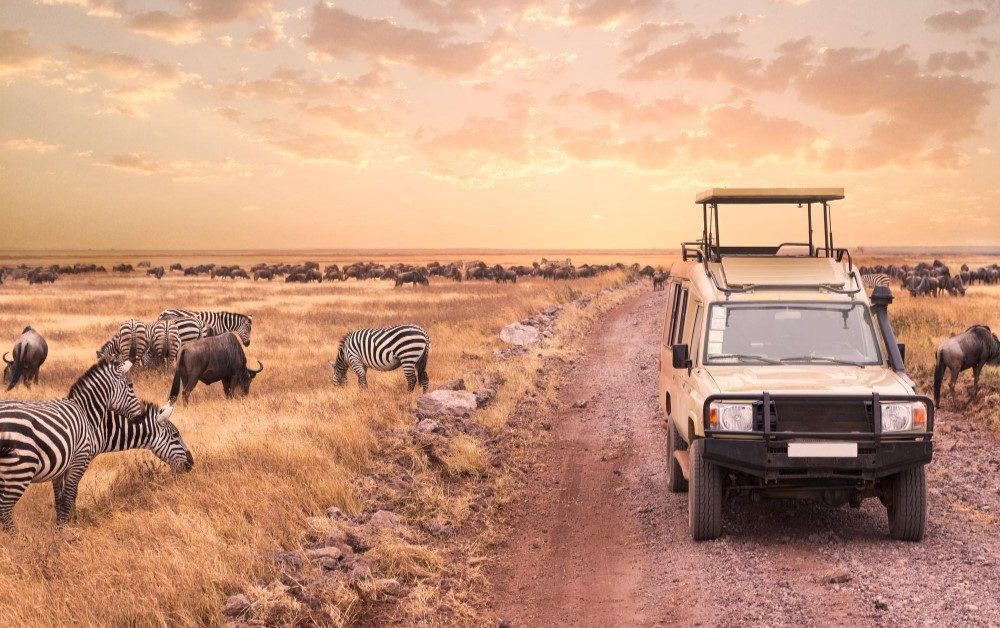
When budget forces a choice between adding a park and adding a night, add the night. Travellers consistently report more satisfaction from three days in one reserve than from one day each in three, and the reason is straightforward: guides need time to learn where the animals are, and you need time to stop photographing everything and start watching.
The exception is habitat variety. If every day looks the same you will tire of it, which is why a Rift Valley lake before the grassland, or the coast afterwards, earns its place even on a shorter trip.
Build in one buffer
Road conditions, weather and light aircraft schedules all move. On any itinerary longer than five days we try to leave one night that could absorb a delay without collapsing the connections behind it, and we strongly advise against booking an international departure for the same day you leave a park.